Dental Crown Types: Which Crown is Best for Your Teeth?
A dental crown is used to restore the strength, shape and appearance of a damaged, cracked, decayed or severely damaged tooth. But with the varied options available, the question that arises is Dental Crown Types: Which Crown is Best for Your Teeth?
So here we will be breaking down for you dental crown types, costs , their pros and cons and which one is the best for you. Let’s dive into the same.
What is a dental crown?
A tooth-shaped cap that is placed over a damaged tooth to restore its appearance and function is termed a dental crown. They are custom-made to match your natural teeth and are generally used for:
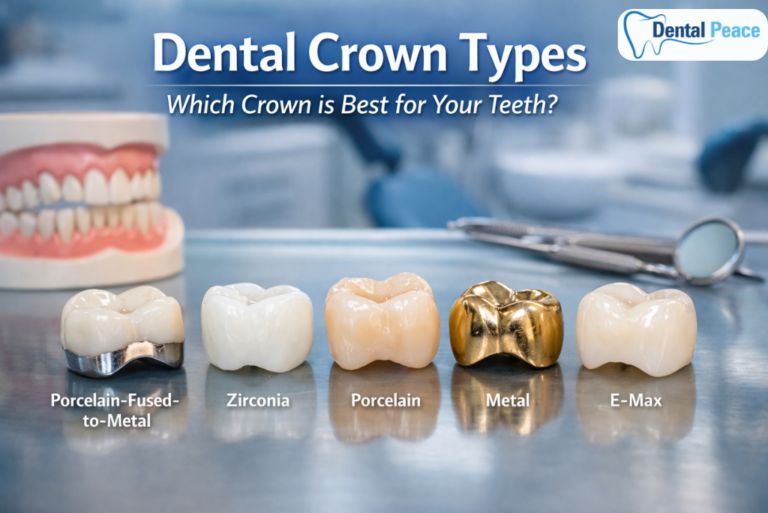
These crowns combine the strength of metal with the aesthetics of porcelain and offer a balance between strength and appearance. These are effective for both front and back teeth. The benefits and drawbacks of PFM are:
They are strong and durable.
They are more affordable than full porcelain.
Have a natural-looking exterior.
Metal lines are more visible near the gums.
The porcelain layer can chip over time.
2. Zirconia crowns:
These are made from an extremely strong ceramic material and are considered to be one of the best overall options because of their aesthetics and strength. These are best suited for patients who grind their teeth.
Benefits:
Biocomptabile
Resistant to cracking
Natural appearance
Durable and long-lasting
Drawbacks:
Slightly more expensive
Feels harder than natural teeth
3. Porcelain (All-ceramic) crowns:
They are more popular due to their close resemblance to natural teeth and are often considered the best choice for front teeth and cosmetic restorations.
Benefits:
Stain-resistant
Ideal for metal allergies
Looks very natural
Drawbacks:
May chip under heavy pressure
Less durable than metal crowns
4. Metal crowns:
These are made from gold or metal alloys and are ideal if durability matters more than appearance.
Benefits:
Rarely break or chip.
Very durable and strong
Require fewer teeth removals.
Drawbacks:
Metallic colour that may not look so aesthetic
Not suitable for visibility
5. Lithium disilicate (E-max crowns):
This is the top-most choice for cosmetic cases and the most natural-looking dental choice that offers a premium all-ceramic option.
With proper oral hygiene and regular dental visits, the life of any dental crown can be extended considerably. A part of the cost may be covered by dental insurance.
Conclusion
Dental Crown Types: Which Crown is Best for Your Teeth? That depends on your individual requirements.
Get in touch with our experienced professionals at Dental Peace to evaluate your oral health and help you make an informed decision.
Location:
C2/252, Kundapura, C-2 Block, Janakpuri, New Delhi, Delhi, 110058