Exposed Tooth Roots: Why They Happen and How to Protect Your Smile
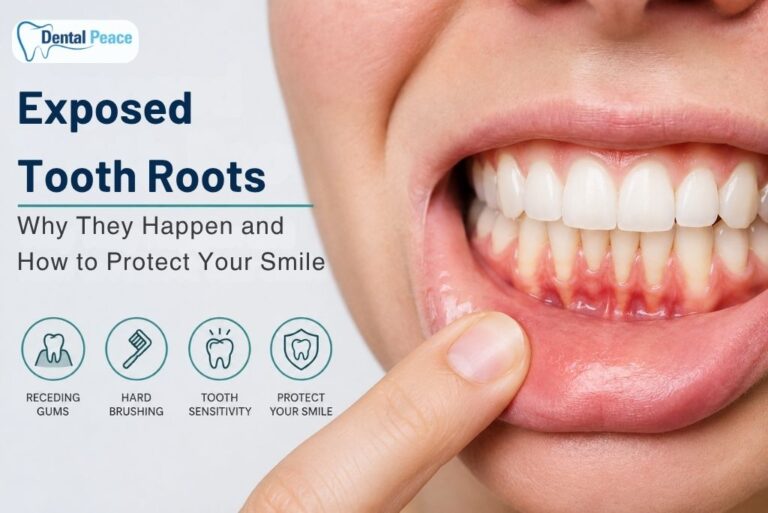
If you have exposed tooth roots, you should know why they occur and how to keep your smile intact. Have you ever cried out “ouch!” when drinking a cold or hot beverage? A zing is often very sharp and sudden, and a sign of exposed tooth roots. It occurs when the gum tissue separates and exposes the root. Roots don’t have the enamel that protects your crown, and this means that they’re sensitive to nearly everything. It is a relatively common problem, but not one to simply ignore.
Why does this happen?
There is no single cause. Typically, it’s a combination of habits and health factors that have accumulated over time.
People are often surprised at how quickly gums wear away when they brush too hard, particularly using a brush with stiff bristles.
If left untreated, this gum disease gradually compromises the tissue that secures teeth in place, which we’ve discussed in this article on swollen gums.
Some people are just genetically prone to having thinner gums
Grinding your teeth at night puts constant stress on the gumline
Crooked or crowded teeth push gums in uneven ways
Smoking cuts blood flow to gum tissue, making it weaker
If your gums have been shrinking back for a while, it’s worth reading up on receding gums too, since the two problems usually show up together.
Signs You're Probably Dealing With Exposed Tooth Roots
Cold drinks or ice cream suddenly feel painful
Teeth look a little longer than they used to
A yellowish tint near the gumline
Gums that feel tender or bleed easily, similar to what’s described in this article on sore gums
Brushing that area feels uncomfortable
None of these is dramatic on its own, but together, they’re a pretty clear signal.
What Can Actually Be Done About It
The right fix depends on how far things have progressed.
Deep cleaning clears out bacteria hiding below the gumline
For more advanced recession, gum surgery can rebuild tissue and cover the root again
Bonding material can shield the exposed area without surgery
Straightening misaligned teeth sometimes solves the root cause literally
Occasionally, when a tooth is too damaged to save, dentists may bring up molar tooth extraction, though that’s rarely the first option on the table.
A Few Habits That Help
Use a soft-bristled brush, not a medium or hard one
Brush in gentle circles instead of scrubbing side to side
Wear a nightguard if grinding is an issue
Don’t skip regular dental visits. Preventive dentistry genuinely makes a difference
Cut back on tobacco if you can
Get gum disease treated the moment you notice it, not months later
Early detection typically leads to easier and less expensive solutions. Seeing your dentist early on to discuss dental treatments is a good way to avoid unnecessary troubles later on.
Final Thoughts
A exposed tooth root is no fun, but it is very easy to deal with once you know what is causing it. Don’t put up with sensitivity just because you think it will pass. Looking for a dental care clinic near me? There’s no need for exposed tooth roots to disrupt your daily life, and the staff at Dental Peace can determine just what is happening and guide you on the best course of action.
Location:
C2/252, Kundapura, C-2 Block, Janakpuri, New Delhi, Delhi, 110058