
Specialist Dentist Greater Kailash for Advanced Dental Care
10:30 AM to 08:00 PM
11:00 AM to 01:00 PM
10:30 AM to 08:00 PM
11:00 AM to 01:00 PM

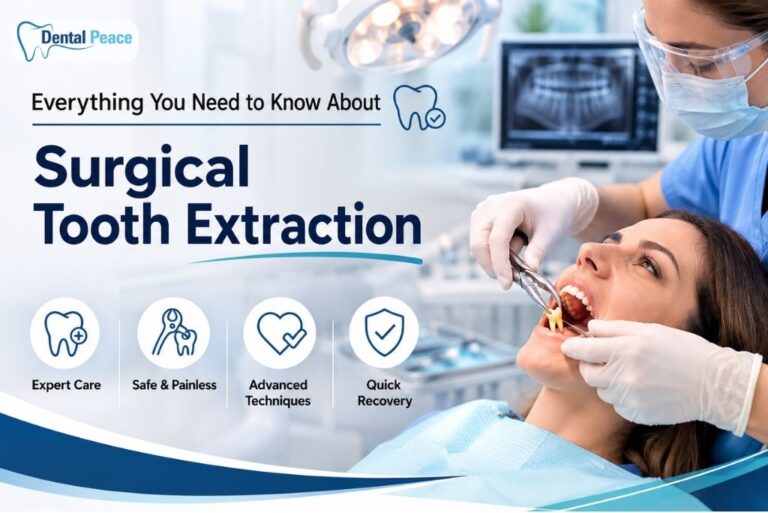
If teeth can’t be removed by traditional tooth removal methods, they might be the subject of a surgical procedure. Oral surgeons perform a special type of tooth removal procedure called surgical tooth extraction, which is used to remove impacted, deeply rooted, or fractured teeth safely.
Not every tooth is going to be as easy to come out as others. When teeth are: your dentist might suggest surgical tooth extraction:
The knowledge of the wisdom tooth’s removal may clarify why some teeth require a surgical procedure and not the standard one.
The process starts with a detailed assessment through imaging, which determines both tooth alignment and dental bone condition. Your oral surgeon will use local anesthesia together with sedation as needed to keep you comfortable throughout the procedure.
The surgeon creates a tiny gum incision to reach the tooth underneath. The dental team will execute a controlled bone removal procedure to improve access to the tooth. The dental team will cut the tooth into smaller segments, which will make it easier to extract the tooth from the mouth.
The dental team performs cleaning procedures at the extraction site before applying sutures. The duration of most surgical extractions ranges from 20 to 40 minutes, while the duration depends on the complexity of the extraction.
There will be some pain after the procedure. Your surgeon will prescribe pain medication that will meet your requirements. Application of ice within 24 hours can decrease the swelling significantly.
The swelling is usually greatest on day 2-3 and will slowly decrease over the next week. Patients recover within 3-5 days, with most patients returning to normal activities. After extraction, it is important that the instructions are given to the patient to make sure there are no complications and that the patient heals properly.
By following post-operative instructions to the letter, these risks are greatly diminished. If you have trouble breathing or severe pain, heavy bleeding, or fever, see your dentist right away.
If the tooth is deeply embedded, you can do serious damage to your gums if you try to pull it out yourself. Professional oral surgeons are experienced, trained, and equipped with the tools they need to safely manage complex cases.
The comparison of extraction methods can give an understanding of why surgical methods are best in certain situations.
When a tooth is damaged or diseased and could have been saved, then it needs to be removed. Frequent dental care and check-ups can help identify issues early and save your teeth.
Sometimes, rotting teeth can be saved by root canal treatment. Understand when to consider saving or removing teeth.
Make arrangements to get you home, since sedating you will not be able to drive safely. Expect soft foods and refrain from exertion for one week.
Rest is essential. Hold your head up, apply ice packs, and follow your doctor’s instructions. No smoking and alcohol for at least 72 hours (both have a slow healing process).
Soothing salt water rinses, starting 24 hours after the procedure, help to heal. It is important to know how to identify the signs of Dry Socket so that you can spot any complications early.
Falling teeth affect chewing and talking. Talk to your dentist about other options to replace your tooth, such as a dental implant, bridge, or denture.
If done by a qualified professional, modern Surgical Tooth Extraction is routine, safe, and minimally invasive. Don’t put off treating teeth that have issues – treat them early to avoid future complications. Book Your Appointment Today!
Location:
C2/252, Kundapura, C-2 Block, Janakpuri, New Delhi, Delhi, 110058
F-14 (LGF), Kailash Colony, Block K, Greater Kailash, New Delhi, Delhi 110048