
10:30 AM to 08:00 PM
11:00 AM to 01:00 PM
10:30 AM to 08:00 PM
11:00 AM to 01:00 PM
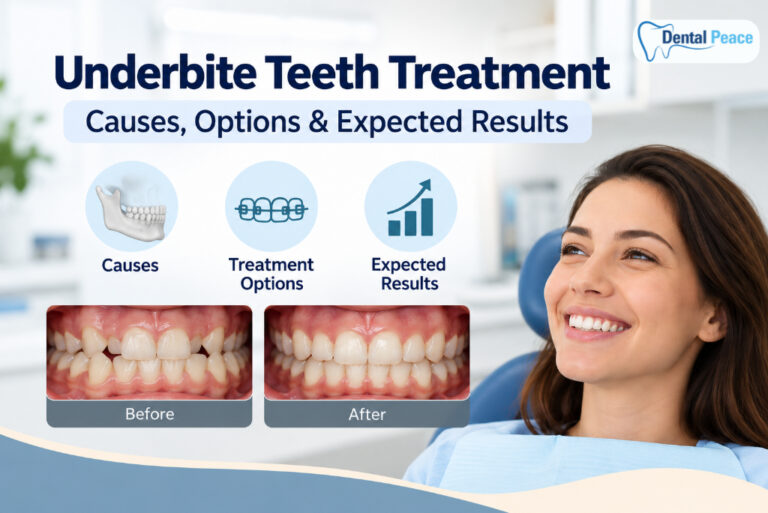
Here’s something plenty of people never think about: how their teeth actually meet. If your bottom front teeth sit ahead of the top ones, that’s an underbite. Underbite teeth treatment sounds like a big deal, but most cases are very fixable. Let’s go through what causes it and what your options look like.
Mostly the jaw. Either the lower one is too big, or the upper one is too small. Sometimes the teeth are simply set wrong. The report says around 5% to 10% of people have an underbite, so you’re far from alone.
A few things raise the odds:
Left alone, it gets messy. Crooked bites make brushing tricky, so bacteria hang around and cavities show up. Teeth can chip too. Already have a sore tooth? Read about toothache treatment near me. Cracked one? Here’s how to fix a broken tooth.
Early underbite teeth treatment is simpler. Dentists say ages 7 to 10 are ideal, since the jaw can still be guided. That’s why a first pediatric dentistry visit around age one makes sense. Adults still have choices. They just wait longer for results.
This depends on your travel method. The time for braces and aligners can be a year or more. Surgery equates to additional healing, and your surgeon will outline the process.
The majority of people see improved chewing and speaking ability. It’s common to get relief from jaw pain. Cleaning becomes easier, and many find that simply smiling is easier.
Brush 2 times a day, floss, and visit the dentist every six months. If directed to do so, wear a night guard. If the teeth are misaligned, then there is plaque that is not being seen, and that will cost you if you do not visit.
If you experience discomfort or pain when biting or chewing, schedule a visit. If your child’s bottom teeth are in front of the top teeth, the same. A rapid evaluation, possibly X-rays, and possibly a referral to an orthodontist or an oral surgeon.
Each underbite treatment plan is designed with your objectives, comfort level, and age in mind. If an operation is required, you will be referred to the appropriate surgeon.
Underbite teeth treatment can alter your chewing, talking, and smiling. Avoid making the decision because of pain. The small bite issues tend to increase over time, and if caught early, it will save you from future hassles. A small change will be a great change. Schedule a complimentary consultation at Dental Peace and determine your choices.
Location:
C2/252, Kundapura, C-2 Block, Janakpuri, New Delhi, Delhi, 110058
F-14 (LGF), Kailash Colony, Block K, Greater Kailash, New Delhi, Delhi 110048