
Monday to Saturday
10:30 AM to 08:00 PM
Sundays
11:00 AM to 01:00 PM
Monday to Saturday
10:30 AM to 08:00 PM
Sundays
11:00 AM to 01:00 PM

Menu
Flexible Dentures for a Comfortable & Natural Fit
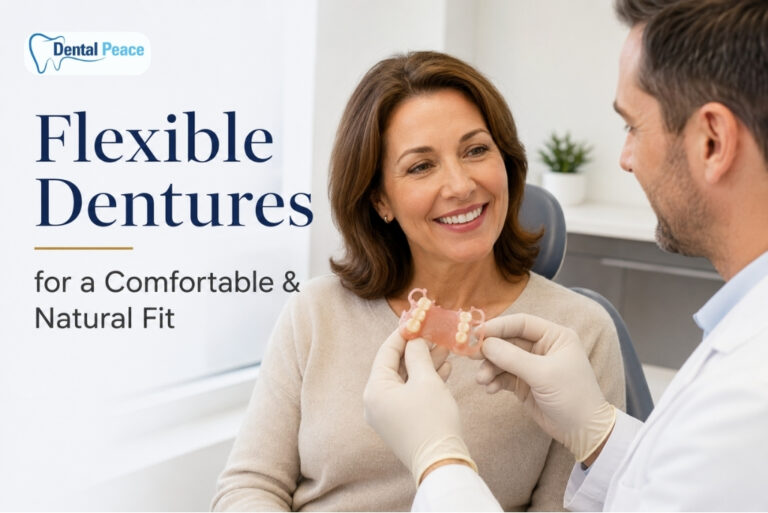
Losing a tooth (or a few) changes more than your smile. It changes how you chew, how you talk, even how confident you feel walking into a room. Flexible dentures solve a lot of that – they’re soft, they bend with your mouth, and honestly, most patients say they forget they’re even wearing them by the second week.
If tooth loss has been bothering you, it’s worth starting with a proper dental examination before deciding on any replacement option.
What Exactly Are Flexible Dentures?
Instead of the hard acrylic base used in older-style dentures, flexible dentures are made from a thin nylon-based material. It flexes as you talk, eat, or smile – no rigid edges digging into your gums.
The connectors are gum-colored too, not metal. So when you smile, nobody’s spotting a clasp glinting under the light.
Why So Many Patients Switch
We hear the same complaints often - dentures that rub, dentures that feel bulky, dentures that just don't sit right. Flexible dentures were basically designed to fix that. A few reasons patients like them:
- They’re gentler on the gums, with no sharp pressure points
- They look more natural since there’s no visible metal
- They’re lighter, so your mouth doesn’t feel weighed down
- They hold up well even if you drop them (acrylic ones tend to crack)
- Lower chance of irritation or allergic reaction
If you recently had a painless tooth extraction, this is usually the next thing your dentist will bring up.
Are They Right for You?
Not everyone needs the same solution, but flexible dentures tend to suit people who:
- Are missing one tooth or a handful of them
- Would rather avoid implant surgery
- Have gums that react badly to stiff materials
- Want something fitted quickly without a long process
They’re also a solid pick if you’ve already gone through cracked tooth repair and want something low-maintenance moving forward.
Taking Care of Them
Like anything you wear daily, a little upkeep goes a long way:
- Give them a rinse after meals
- Brush gently with a mild cleanser, not regular toothpaste
- Let them soak overnight in a denture solution
- Skip hot water – it can warp the material over time
- Get them checked periodically so the fit stays right
While you’re at it, don’t skip your regular checkups. It’s the same logic behind why dentists recommend dental sealants – small habits prevent bigger problems later.
How Do They Compare to Regular Dentures?
Traditional dentures rely on metal clasps to stay put, and that rigidity can be uncomfortable, especially if your bite isn’t perfectly even. Flexible dentures skip the metal and use their own bend to stay secure instead.
That said, they’re not a fit for every situation. If you’ve lost most of your teeth, another option might work better. This is really a conversation to have during a complete dental care visit, where the dentist can actually look at your mouth and tell you what fits.
What the Process Actually Looks Like
Nothing dramatic here - it's a fairly simple sequence:
- A consultation and quick oral exam
- Impressions taken of your gums
- A trial fitting
- Small adjustments until it feels right
No surgery, no long downtime. That’s part of why it’s often grouped under complete dental solutions for patients who want something efficient.
Bottom Line
Flexible dentures aren’t flashy, but they solve real problems – comfort, appearance, and durability, all without the hassle older dentures came with. If you’re on the fence, book a quick consultation at Dental Peace and see how they feel for yourself. Sometimes that’s really all it takes to decide.
Location:
C2/252, Kundapura, C-2 Block, Janakpuri, New Delhi, Delhi, 110058
F-14 (LGF), Kailash Colony, Block K, Greater Kailash, New Delhi, Delhi 110048