
10:30 AM to 08:00 PM
11:00 AM to 01:00 PM
10:30 AM to 08:00 PM
11:00 AM to 01:00 PM
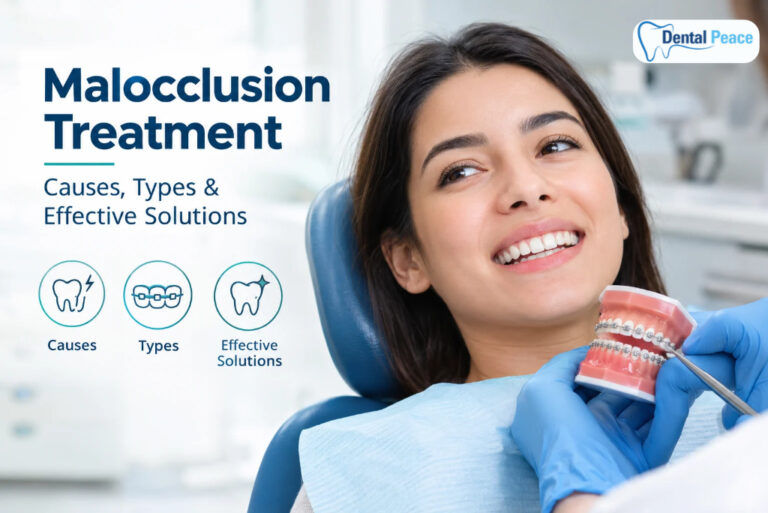
Look in the mirror and bite down gently. Do your top and bottom teeth line up, or does something feel off? That mismatch has a name: malocclusion. Plenty of people have it and never realize. Here’s the reassuring part. Malocclusion treatment is safe, fairly simple, and works at almost any age. Let’s walk through why it happens and what you can do.
Mostly it’s genetics. If your parents had crowded teeth, yours probably are too. Habits add to it, especially in kids.
Adults get it too. When a tooth goes missing, the ones next to it slowly lean into the gap. You won’t notice at first. That’s why permanent tooth replacement is worth thinking about early. If you can’t swing it yet, removable dentures at least hold the space.
Crowded teeth also trap food in tight corners. Over time that turns into one of the quieter causes of bad breath.
Ignoring it usually costs more later. Uneven pressure grinds enamel down and strains the jaw. Crowded spots collect plaque. A regular oral prophylaxis helps, but it can’t move a tooth. Badly worn teeth may need dental crowns and bridges. And if decay goes deep enough, it can reach the tooth nerve.
Then you get a plan built around your bite, not someone else’s.
Aligners suit adults who don’t want visible metal. Braces still win for complicated cases. Your dentist will tell you which one fits.
At Dental Peace, the right malocclusion treatment depends on your X-rays and bite check. Mild cases can finish in around six months. Tougher ones may take two years or more. It’s a long haul, but the results last.
If something feels off when you bite, get it looked at. Early malocclusion treatment is simpler on your teeth and your wallet. Book a visit with Dental Peace and ask what fits you best. Small steps, big differences.
Location:
C2/252, Kundapura, C-2 Block, Janakpuri, New Delhi, Delhi, 110058
F-14 (LGF), Kailash Colony, Block K, Greater Kailash, New Delhi, Delhi 110048